SEARCH LUMINIS HEALTH
Condition

Stroke

Every Minute Matters

Signs of a stroke occur quickly and require fast action to save your life. Every minute counts. The sooner you start receiving care, the better your chances of recovering.

What Is a Stroke?

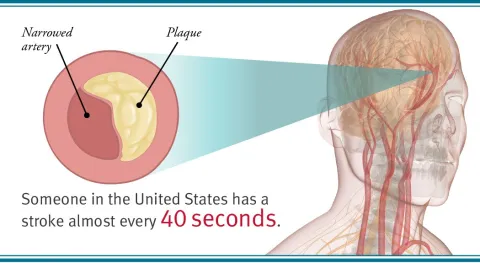
A stroke is a medical emergency that requires immediate attention. It happens when a blockage or bleed in your brain interrupts blood flow. A stroke prevents oxygen from getting to your brain, which causes brain cells to die.

Signs of a stroke occur quickly and require fast action to save your life. Every minute counts. The sooner you start receiving care, the better your chances of recovering.

Why Choose Luminis Health

A Leading Stroke Care Center

The Stroke Care Team at Luminis Health provides priority-one care — the highest level of urgency —to quickly recognize and treat stroke symptoms. As an Advanced Certified Primary Stroke Center, we are equipped to deliver immediate, evidence-based care to give you the best possible chance at recovery.


Our Stroke Center

  • We maintain certification from The Joint Commission, earning the Gold Seal of Approval® for meeting and exceeding national standards for stroke care and patient safety.
  • We are recognized by the American Heart Association through the Get With The Guidelines®–Stroke program, achieving Gold Plus, Target: Stroke Honor Roll Elite and Elite Plus, and Target: Type 2 Diabetes Honor Roll awards.
  • Our care extends beyond emergency treatment. We offer personalized rehabilitation programs to support recovery and peer support groups to help patients and families adjust after a stroke.
  • 24/7 stroke care services
  • Outpatient Rehabilitation services

Stroke Diagnosis and Treatment

Strokes can affect cognitive function, speech, and a wide range of physical abilities. Recognizing and treating a stroke quickly greatly improves your chances of recovery.


Recognize Stroke: BEFAST

Use BEFAST to identify stroke symptoms:

  • Balance: Sudden loss of balance or coordination
  • Eyes: Trouble seeing in one or both eyes
  • Face: Facial drooping or numbness, especially on one side
  • Arms: Weakness or numbness in one arm
  • Speech: Slurred speech or difficulty speaking
  • Time: Time to call 911 immediately

If you notice any of these signs, call 911 right away. Do not wait.


Stroke Tests and Screening

As soon as you arrive at the hospital, our stroke team examines you. We'll screen your symptoms and rule out other health conditions that can mimic a stroke.

The American Heart Association and American Stroke Association provide several helpful, easy-to-use resources on stroke awareness and prevention. Their materials include recognizing stroke warning signs, stroke risk factors and stroke prevention tips.
 

Stroke treatments

What Happens at Luminis Health

If we suspect a stroke, we run advanced brain scan tests, like a CT scan or an MRI. We may also do a CT angiogram (a CT scan with an injection of a special dye), which lets us get a closer look at the blood vessels and tissues in your brain. These tests tell us what kind of stroke it is, so we can administer the proper treatment.
Our stroke treatments are highly individualized, depending on your diagnosis and symptoms and may include:

Special medicine can break up a clot and prevent further symptoms. But you must receive it shortly after your symptoms start. That's why speed is vital — both on your part in calling 911, and our part in assessing and treating you.

Our stroke team performs state-of-the-art, minimally invasive surgery to stop bleeding, repair a weak or damaged blood vessel or remove a clot.

When you come to us for stroke care, you'll get a dedicated team of rehabilitation professionals. We work together to provide personalized care with:

  • Physical therapists to help you regain your strength, balance and physical function.
  • Occupational therapists to help you relearn daily skills and show you ways to live and thrive with changes in your abilities.
  • Speech-language therapists to help you regain communication, swallowing and memory skills.

Preventive Care: Reducing Your Risk of Stroke

Anyone can have a stroke, but taking proactive steps can significantly reduce your risk. We help you monitor your health and manage conditions like high blood pressure and diabetes, which increase stroke risk when not controlled.
Luminis Health stroke care specialists recommend:

  • Annual checkups with your primary care provider to monitor blood pressure, cholesterol, and other risk factors
  • Managing your health by controlling weight, blood pressure, and blood sugar through diet, lifestyle changes, and medications if needed
  • Building a support team that may include a dietitian, health coach, and behavioral health specialist

At Luminis Health, we’re here to help you eat healthier, stay physically active, quit smoking, limit alcohol use and manage your stress.

Support and Resources for Stroke Care

A stroke can be a life-changing experience — but you don’t have to go through recovery alone.


Luminis Health offers:

The Peer Mentorship Program, the Power of 2. This program matches recent stroke survivors with specially trained mentors who have had a stroke themselves. Through one-on-one time together, stroke survivors can ask questions, discuss challenges and concerns, and feel connected.

Our Stroke Support Groups. We have monthly stroke support group and stroke caregiver support meetings where you can ask questions, discuss challenges and receive encouragement from our stroke care professionals and stroke survivors.