Author
by Luminis Health

Log in with MyChart
Access personalized site features & view your health records.
Learn more about MyChartDon’t have a MyChart account?
Your Account
Go to MyChart
Messages
Billing Summary
Find Care
Schedule Appointment
My Care Team
My Record
Appointments
Medications
Insurance Summary
Log in with MyChart
Access personalized site features & view your health records.
Learn more about MyChartDon’t have a MyChart account?
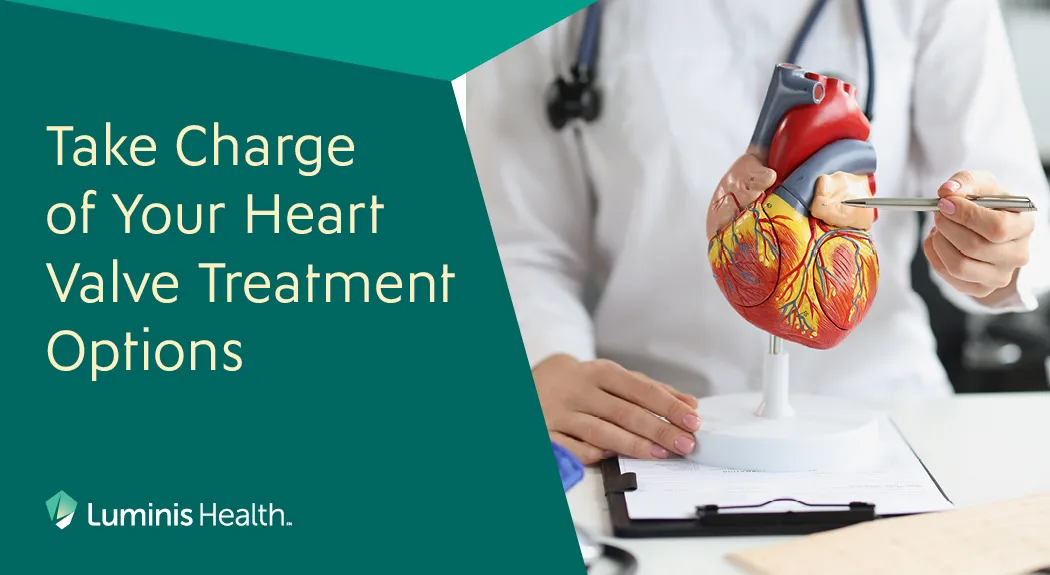
Your heart works hard every day to keep blood moving through your body — and your heart valves play a big role in making that happen. When a valve isn’t opening or closing the way it should, it can affect how efficiently your heart pumps. If you’ve been diagnosed with heart valve disease (or are experiencing symptoms), understanding your options can help you feel more confident and prepared for what’s ahead.
Heart valve diseases in adults are typically categorized into two main types, regurgitation and stenosis. Understanding this is a crucial first step in making informed care decisions. A properly functioning valve allows the heart to pump blood forward and in one direction.
In both of these conditions, the heart needs to work harder than it needs to in order to maintain proper flow to the body. This inefficiency, if not treated, can lead to weakening of the heart muscle.
Many people live with a heart valve that do not work correctly, sometimes without ever experiencing problems. Still, it is important to seek medical guidance once a heart valve condition is discovered since it can worsen over time.
Signs and symptoms may include:
If you have been diagnosed with a heart valve disease, it can be successfully managed with medicines and observation. Sometimes, surgical procedures may be needed to correct the valve to allow for efficient pumping of blood through the heart.
There are several reasons your specialist may recommend heart valve surgery, including:
There are two main types of surgery that you may have:
The right approach depends on your specific condition, overall health and how well your heart is functioning. An experienced heart specialist can walk you through your options and help guide you on which treatment is best for you.
If you have a heart valve condition, you will want a care team you can count on to answer your questions, ease your fears and get you back to the activities and people you love. Luminis Health is known for emergency life-saving heart attack care, a dedicated heart center, and today’s most promising technologies and treatments. Learn more at Luminis.Health/HeartHealth.
 Murtaza Dawood, MD is an experienced cardiothoracic surgeon who is recognized for performing operations for complex valve disease and atrial fibrillation.