Author
by Luminis Health

Log in with MyChart
Access personalized site features & view your health records.
Learn more about MyChartDon’t have a MyChart account?
Your Account
Go to MyChart
Messages
Billing Summary
Find Care
Schedule Appointment
My Care Team
My Record
Appointments
Medications
Insurance Summary
Log in with MyChart
Access personalized site features & view your health records.
Learn more about MyChartDon’t have a MyChart account?
Hello,
Go to MyChart
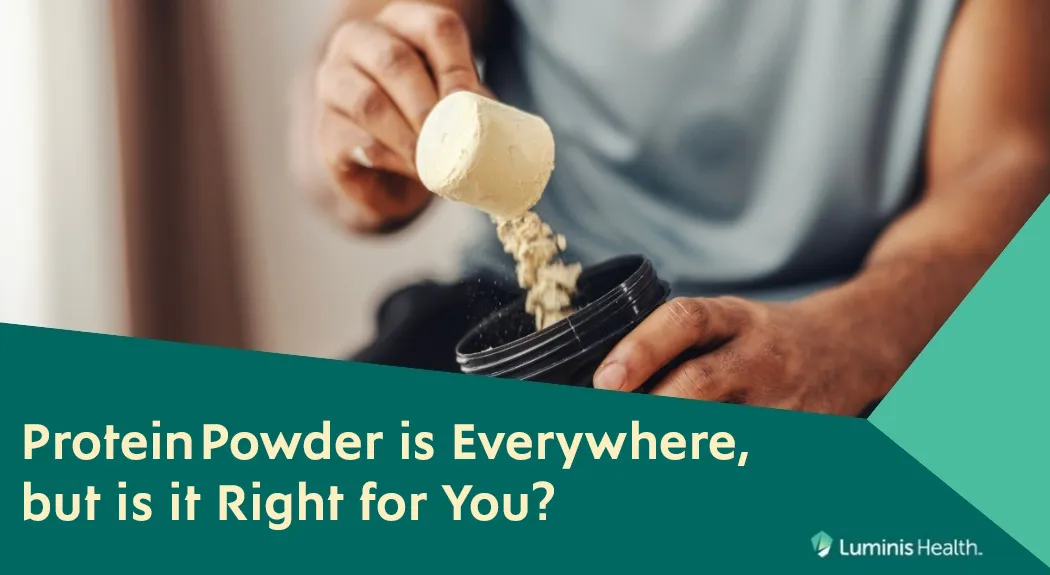
Protein is popular. Grocery store shelves are packed with protein bars and high-protein cereals, fast-food chains are pushing protein-heavy menu items, and even coffee shops are blending protein powder into lattes.
Keep in mind, you only need 0.54 grams of protein per pound of body weight. That means an average 150-pound adult needs about 81 grams of protein every day.
If you’re struggling to hit your daily protein goal, you may consider protein powder.
Your first source of protein should be healthy, whole foods such as lean meat, eggs, nuts and lentils. Protein plays an important role in building and repairing muscles, supporting immune function and helping you feel full longer after meals. It also helps maintain healthy skin, hair and nails and provides energy for your body throughout the day.
Most people meet or exceed their recommended daily protein intake with their normal diet. However, if you’re falling short of your daily protein needs, supplements like protein powder can help.
Powdered protein comes from different sources, including:
Most people do not need more than 1–2 servings of protein powder per day.
Simple ways to take your protein powder can include:
You should spread your protein intake throughout the day. If you’re having a protein shake to support your workout recovery, it’s best to drink that shake shortly after your workout.
Depending on the protein powder you choose and how you use it, protein powder may make you gain weight. Not all protein powders are the same, and those that are high in calories or added sugar can lead to unintended weight gain. Look for a powder that helps you stay under the American Heart Association’s added sugar recommendations:
While protein powder is generally safe for children, most kids don’t need it. Children may need supplements if they are:
Speak with your child’s pediatrician to learn if you want to use a child-safe protein powder.
Every person’s protein and nutrition needs are different. Start the conversation with a registered dietitian at Luminis Health who can help you create a personalized plan to support your energy, muscle health and long-term wellness.
 Colleen Kiley, MS, RD, is a Lead Diabetes Educator for Luminis Health.