Author
by Luminis Health

Log in with MyChart
Access personalized site features & view your health records.
Learn more about MyChartDon’t have a MyChart account?
Your Account
Go to MyChart
Messages
Billing Summary
Find Care
Schedule Appointment
My Care Team
My Record
Appointments
Medications
Insurance Summary
Log in with MyChart
Access personalized site features & view your health records.
Learn more about MyChartDon’t have a MyChart account?
Hello,
Go to MyChart
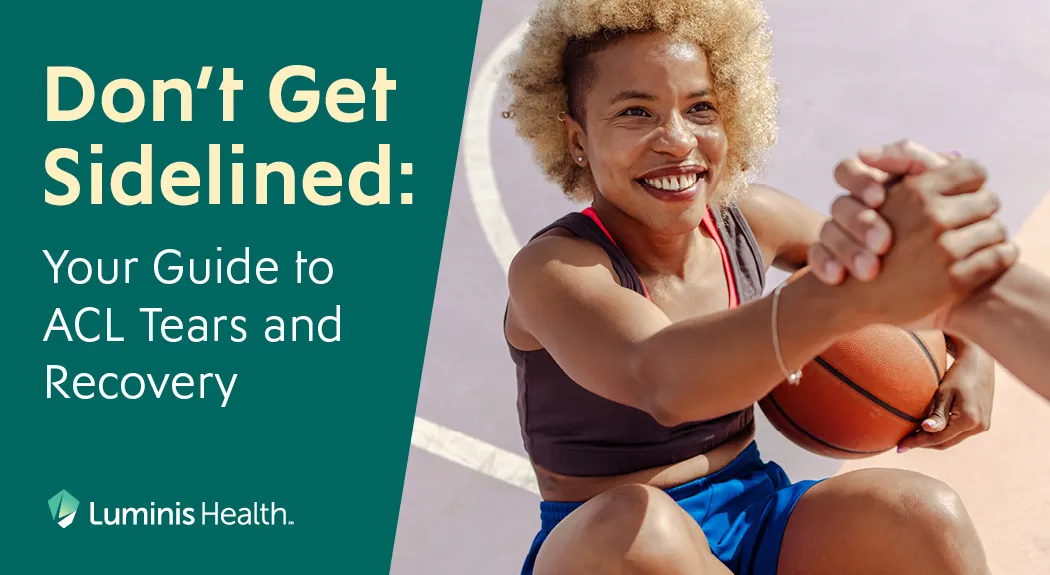
Anterior cruciate ligament (ACL) tears can be devastating to athletes across a range of sports, from basketball and football to soccer and skiing. They are often “season-ending” injuries for student athletes and professionals alike. But they don’t have to keep you sidelined forever. Here’s what you need to know about ACL injuries — and how to protect yourself.
Your ACL (anterior cruciate ligament) is a piece of tissue in your knee that connects your thigh bone to your shin bone and keeps your knee stable. ACL tears happen when your knee over-rotates or bends beyond your range of motion. And these injuries can range from sprains (overstretching) to complete tears.
In sports, common causes of ACL tears include:
While many people associate ACL tears with sports, falls, car accidents and other trauma can also cause these injuries.
ACL tears can feel different to different people. You may experience:
Symptoms will likely be more severe if you have a complete tear.
Researchers have found that across many sports, women experience more ACL injuries than men — up to 3.5 times as many in basketball and four times as many in soccer. This is likely due to:
Anatomy: Women tend to have a smaller intercondylar notch (the groove in the knee where the ACL sits), which means a smaller ACL that may be more vulnerable to injury. A wider pelvis can also change knee alignment and add stress on the ligament.
Hormonal changes: Estrogen, a hormone that helps regulate the female reproductive system, can loosen ligaments and raise injury risk. Because estrogen levels fluctuate during the menstrual cycle, you may be at higher risk of injury at certain points in your cycle. Studies, including one funded by FIFA, are exploring how cycle-based training adjustments might help reduce injury risk.
Movement patterns: Women tend to rely more on their quadriceps than their hamstrings during activity, which can place greater stress on the ACL. Differences in proprioception — your body’s sense of joint position and movement — may also play a role.
Whether you feel an immediate “pop” or have pain or instability, most people know right away if they’ve torn their ACL — especially if the injury occurs while playing a sport. However, if you have a small tear, you might not notice it during everyday activities.
You’ll need a sports medicine physician to diagnose your ACL tear. They’ll determine the severity of the tear and recommend the best course of treatment, including surgery.
It depends on the severity. ACL sprains (partial tears) can often heal on their own with rest and physical therapy. However, complete ACL tears do not heal on their own and typically require surgery to reconstruct the ligament. A sports medicine physician can help you determine the best course of treatment based on your injury, activity level and goals.
Recovery time depends on the severity of your injury. ACL sprains may heal in a few weeks to a few months with rest and rehabilitation. For complete ACL tears that require surgical reconstruction, recovery is a gradual process: most patients begin running and weight training around 3 to 4 months, progress to sport-specific drills at 4 to 5 months, and return to full sports activity between 6 and 9 months. Your physician will monitor your progress and clear you for each stage of recovery.
While you might not be able to prevent ACL tears completely, you can lower your risk of injury by:
If you think you may have torn your ACL, Luminis Health Orthopedics is here to help you recover and keep moving. Schedule a same-day or next-day appointment at Luminis.Health/OrthoToday.
 Dr. Ben Petre is a sports medicine orthopedic surgeon at Luminis Health.