Author
by Luminis Health

Log in with MyChart
Access personalized site features & view your health records.
Learn more about MyChartDon’t have a MyChart account?
Your Account
Go to MyChart
Messages
Billing Summary
Find Care
Schedule Appointment
My Care Team
My Record
Appointments
Medications
Insurance Summary
Log in with MyChart
Access personalized site features & view your health records.
Learn more about MyChartDon’t have a MyChart account?
Hello,
Go to MyChart

The back-to-school seasons brings excitement—from new teachers to new backpacks. But amid the preparation, it’s also a key moment to have honest conversations with your teen about the risks of vaping and using marijuana.
First, a reality check: In Maryland, 14% of high school students reported using marijuana in the past 30 days, according to the latest health data. While teen experimentation can be common, it doesn’t make it safe. That’s why it’s important to talk to your kids early and often. Sharing facts, not fear, can help them make informed, healthy choices.
Marijuana is legal in Maryland, so it’s safe, right? Not for teens. Their brains are still developing and regular marijuana use can interfere with that growth in serious ways. Potential effects on children and adolescents include:
Still not convinced? Research shows that teens who start using pot before the age of 18 are seven times more likely to develop marijuana use disorder later in life—a condition where a person struggles to stop using marijuana, even when it negatively affects their health, school, or relationships.
Vaping has become increasingly popular among young people. It’s often cheaper than cigarettes, comes in appealing flavors, and is heavily promoted on social media—which can make it especially attractive to teens. Many people assume that vaping is a safer alternative to smoking tobacco. But the reality is more complicated:
Having these conversations with your teen can feel uncomfortable at first. Here are some tips to get you started:
Parenting can be tough, but you’re not alone. Luminis Health mental health providers, with expertise in adolescent care, have already laid the ground work.
Through funding from the Maryland Community Health Resources Commission, behavioral health education and support services have been successfully delivered in six high schools in Prince George’s County. The program—developed in close partnership with local schools—has demonstrated meaningful impact in supporting student well-being.
Due to its success, the state has renewed funding for the upcoming school year following a highly competitive grant process. This continued investment underscores the importance of school-based behavioral health initiatives and the strength of collaborative community partnerships.
If you or your children need additional support, the Behavioral Health Urgent Care walk-in clinic at Luminis Health Doctors Community Medical Center in Lanham offers treatment for non-life- threatening mental health needs for ages four and up. No appointment is necessary. Thanks to the state grant, we will expand our hours later this fall to include weeknights and Saturdays.
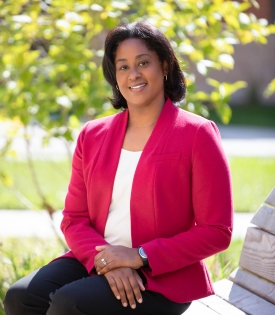 Dr. Jesselina Curry is the system medical director for ambulatory behavioral health services at Luminis Health.
Supported by the Maryland Community Health Resources Commission and Maryland Consortium on Coordinated Community Supports, the views presented here are those of the grantee organization and not necessarily those of the Commission or Consortium.